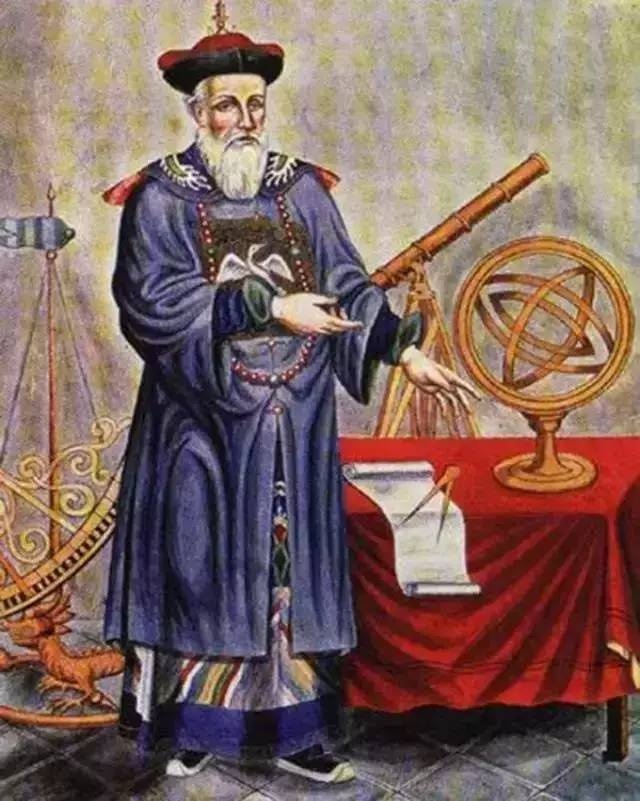
I decided to go down the rabbit hole with Giuseppe Castiglione, reading about him in the course material of this week really piqued my interest. I tried to do a lot of my research and site jumping from site to site almost like the popcorn game, I wanted to have them all connected. I started with the site provided in exploration pack 2 of this week which linked me to the Wikipedia page on Castiglione. I read the Wikipedia page just to gain some general insight into his background and what he may have done while a court painter during the reign of the Qing, I did learn that he helped as an architect and helped designed the palace that McCartney described in his visit to see the Emporer.
From the Wikipedia page, I went to the references to find links to other pages where I could find information on Castiglione which led me to find my best and most authoritative source which was a journal entry titled “Reconciling Two Careers: the Jesuit Memoir of Giuseppe Castiglione Lay Brother and Qing Imperial Painter“. I felt that it was more authoritative than the rest because it was found on Academia, an open-source website for academic work, but the journal entry itself is within the Journal for Eighteenth-Century Studies which is peer-reviewed. I found this article the most interesting as it delved into the duality and the conflicts from Castiglione being a Jesuit as well as an imperial court painter. As with being a Jesuit, he was bound to follow certain principles that serving as a part of the imperial court directly conflicted with such as the need to maintain humility, the need to live in poverty, and the need to serve no one but god. Jesuits like Castiglione were heavily scrutinized by outsiders at the time for holding the positions they did but overall were given a pass by the Jesuits because of how valuable they were to the mission trip via their proximity to the Emporer.

The academic article did not have any links for me to follow so I resorted to looking up Castiglione’s name on google which in turn led me to lots of websites detailing his work, specifically his very famous One Hundred Horses painting. Through all the websites I only picked ones that appeared to be more credible, such as websites with a .edu ending or a .org ending. The first article I read went into detail on Castiglione’s fusion of his European painting style with the native Chinese style as well as the process which he went through to paint One Hundred Horses, showing his predatory work as well as the final product. I then jumped to the MET’s website as they had posted the entirety of Castiglione’s preparatory sketches of the One Hundred Horses painting, this was done on paper with charcoal as he did not want to mess up on the expensive silk which did not allow painting over or fixes. The work was very detailed and extremely impressive I understand better as to why it was considered a masterpiece. Finally, I watched a short video produced by the Virginia Museum of Fine Arts which detailed Castiglione’s life briefly as well as showing off some of his other work besides just the One Hundred Horses painting, but they did also show that work in much detail.

